There’s a lot you don’t know about alcohol free beer. Trust us.
For instance, non-alcoholic beer isn’t just a contemporary fad. It’s a drink with a long history that can be traced back centuries, spanning across multiple continents.
That can in your hand is so much more than an alternative. It’s a legacy.
History of Non-Alcoholic Beer: Ancient Times
We can actually follow the path of non-alcoholic beer all the way back to ancient civilisations. While the purpose (and certainly the taste!) was far different than it is today, alcohol free concoctions found their way across Ancient Egypt, where they are said to originate, to Ancient Greece and beyond.
Beer is “one of the oldest drinks known to humanity.” It first appeared circa 3100-2900 B.C., and ancient Greeks like Herodotus referred to it as “wine from barley.” It was said that the god Dionysus taught ancient Greek historian Diodorus Siculus how to brew beer around the 1st century B.C. Beer was called “zythos” or “zythum.” Zythum was reportedly low-alcohol, and was often used as an offering to the deities.
What ancient Greeks and Egyptians were not doing, however, was kicking back in their free time with a goblet of ice cold beer. No; writings betray that ancient peoples didn't really like beer.
This isn’t a surprise, especially when you take into account their brewing methods. Perhaps the biggest culprit to this revolting taste is the absence of hops, which didn’t widely enter the brewing space until the Middle Ages. They also used a very simple two-stage mashing process to convert the starch in ground grains into enzymes. Rather than today’s standard of boiling, grain was processed with lukewarm or cold water.
History of Non-Alcoholic Beer: The Middle Ages
You’ve heard of turning water into wine… try beer!
In the Middle Ages, beer played an interesting role. Low-alcohol brews, known as “small beer,” served as a more sanitary way to hydrate oneself. That’s right; the water was so unreliable that people drank beer instead.
It wasn’t a crazy proposition, either. Low-no alcohol beer is actually known to have hydrating properties, as the combination of carbohydrates and electrolytes can assist the absorption of water. Low-alcohol beer also provided a great source of calories, which was needed for the labour-intensive norms at the time. Naturally, everyone drank beer, from adults to children to pregnant women.
Surprise(?): beer still didn’t taste great.
It was known as “cheap” and “weak,” and was often used for medicinal purposes. It was bitter, and the alcohol content in small beers was simply boiled off, leaving an unsavoury result.
But stay hydrated, right?
History of Non-Alcoholic Beer: The 19th Century On
With the rise of the temperance movement came a need for alternative options to full-strength beer.
Introducing: near beer. Near beer is just another term, like “small beer,” that refers to low alcohol beers. Near beer became popular during the temperance and Prohibition eras in the United States as a way to circumvent the ban on full-strength beer. These fermented malt beverages circulated from two companies in the 1920s: Anheuser-Busch and Miller Brewing Company.
During the Victorian era here in the UK, we experienced the temperance movement in full force. Cheesemonger Joseph Livesey was at the forefront, signing a pledge of total abstinence alongside other temperance believers in 1832 and officially kicking off the movement. This cultural shift inspired businesses known as “temperance bars,” establishments across England that served a variety of beverages like root beer and non-alcoholic beer.
Both in the US and the UK, this temperance-born beer also didn’t taste amazing. It was quickly abandoned following the end of Prohibition and the simmering of the temperance movement.
Non-alcoholic beer found another necessity to fuel its resurgence in Germany in the 1970s. The amount of beer people were drinking declined during this period, and a brewery called The Englehardt took notice. They marketed a brand of non-alcoholic beer called AUBI to drivers.
This did not last very long either, and the product simmered off the market.
In the 1980s, the UK had one of its first real cracks at alcohol free beer. The first non-alcoholic beer in the UK is widely agreed to be the Barbican, known for its strong fruit and malt flavour and its later migration to the Middle East as a halal option. Multiple breweries and alternatives cropped up, but still received taste complaints due to the brewing method. Brewers were still dealcoholising beers at the end of the process. This involved boiling off the alcohol, destroying the complex and rich flavours that define full-strength beers.
Soon, new brewing processes for non-alcoholic beers emerged. These improved taste and paved the way for the modern movement.
History of Non-Alcoholic Beer: Current Rise
So, what’s the point of non alcoholic beer? Where does it find its relevance in the 21st century?
It’s no secret that non-alcoholic beer is on the rise. NoLo beers are popular with more than just Gen Z; they offer a healthier, safer alternative to beer. Even better, taste is no longer a compromise. Not when it comes to premium brews.
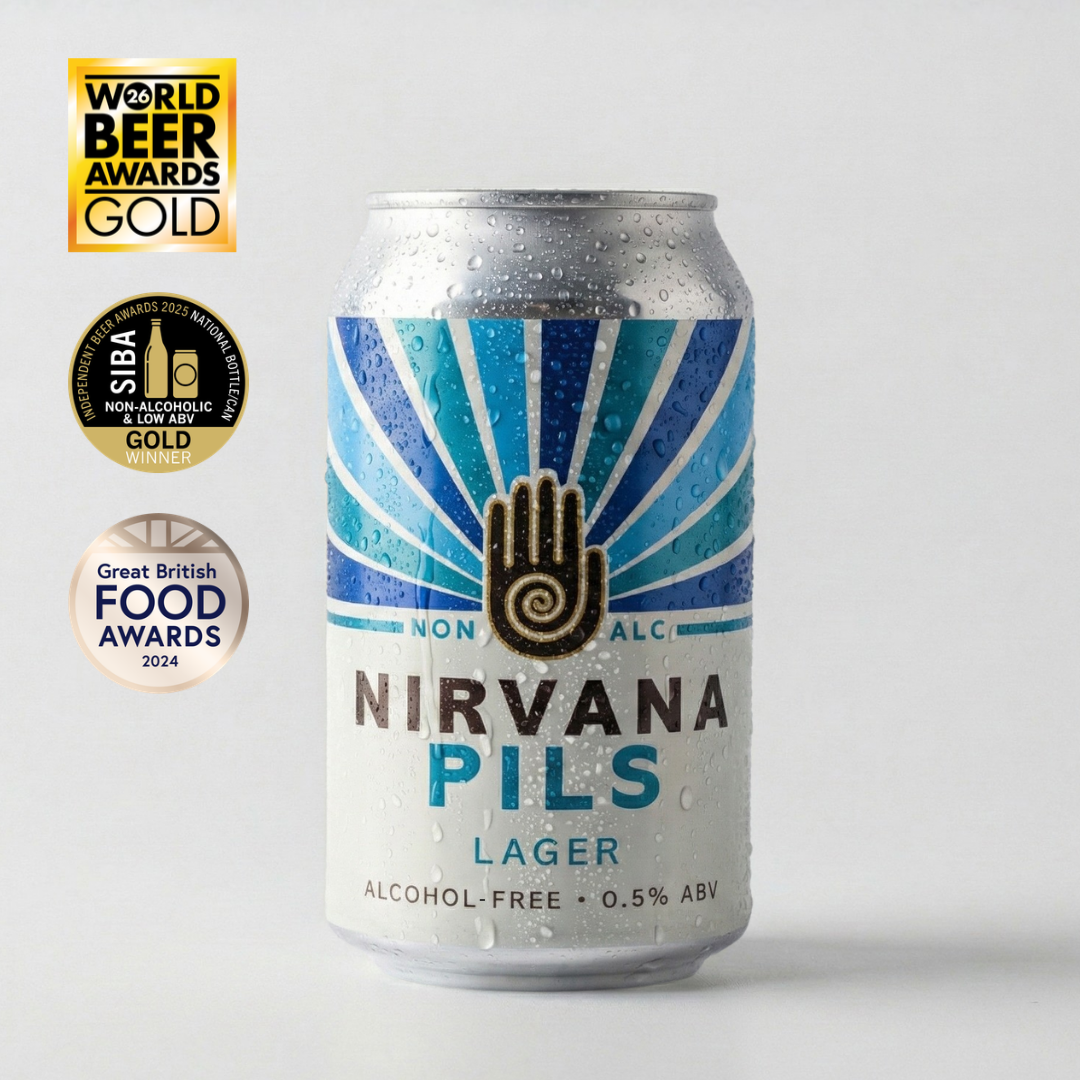
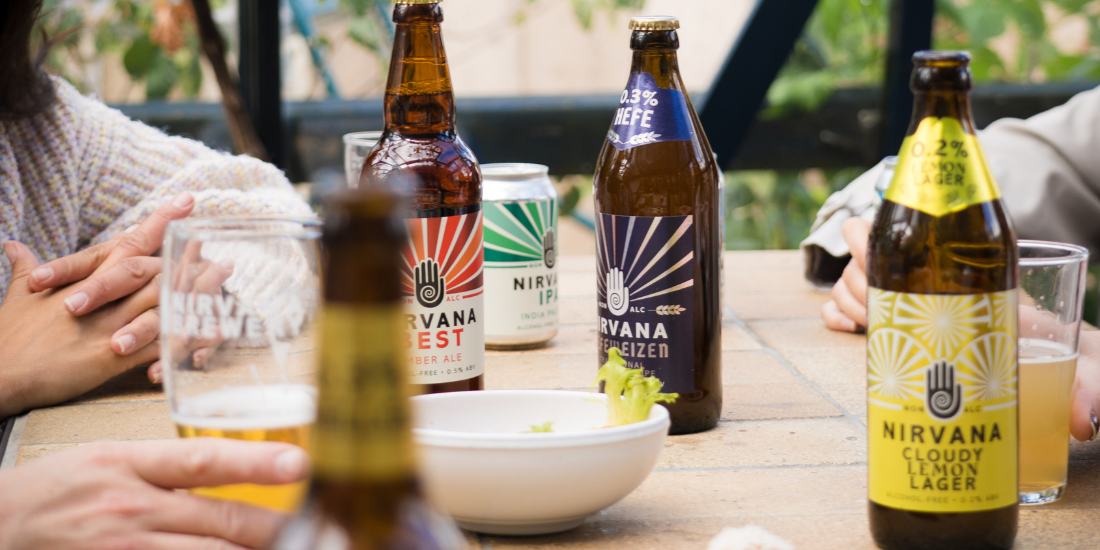
Want to hold a can of history in your hand? Meet Nirvana: the first brewery in the UK to pioneer the new wave of non-alcoholic brewing. Except, we’re not just first on the scene. We’re a non-alcoholic beer only brewery, meaning we began perfecting our alcohol free process in 2016, and ten years later, we’re still going strong. Our taste is award-winning, so you don’t have to sacrifice the taste of beer to go non-alc.
Try yours today. Taste everything, miss nothing.