The dangers of drinking and driving are steep. In the wake of the NHS’ increasing efforts to limit alcohol consumption across the UK, many are turning to no-or-low-alcoholic options in a variety of situations. Naturally, this leads to the question: can you drink and drive on non-alcoholic drinks?
The short answer is yes, as long as drinking these beverages does not impair your ability to drive. Studies have shown that people consistently fail to effectively multitask while driving, a pitfall well documented by the epidemic of texting while driving.
What are the parameters of legal drinking, and where do non-alcoholic beverages stack up?
Why is low or no alcohol free beer safe to drive on?
Testing Alcohol Concentration
The legal determination of driving sobriety is derived by the ratio of alcohol in blood or breath. Respectively, these are measured by blood test and breathalyser.
The UK drink drive limit actually differs depending on where you are, as Scotland has a different legal limit than the rest of the UK. Regardless, the process largely remains the same. If the police suspect you may be under the influence, they will pull you over and breathalyse you first. The police can stop and breathalyse you at any time, and failure to comply (or offer a reasonable excuse) may result in arrest.
Breathalysing will measure the amount of alcohol present in your blood. The tool includes a chemical sensor that reacts to alcohol content in breath. The breathalyser then translates this into units (ratio of micrograms per 100 millilitres of breath).
If you fail this test, you will be taken to a police station and tested again. If you are unable to take a breath test for any reason, the police will perform a blood test on you.
Blood tests will determine your “Blood Alcohol Concentration” (BAC), measured by the ratio of milligrammes per 100 millilitres of blood. The last way to calculate alcohol content is via urine, quantified by the ratio of milligrammes per 100 millilitres of blood.
Non-alcoholic beer, which is widely considered to be any beer with an ABV below 0.5%, has too little alcohol in it to make you even tipsy. It’s nearly impossible to achieve a BAC above the legal limit with these beverages, as your body processes alcohol too quickly for the small amount in low-no beer to make a difference.
Legal Drink Drive Limit
How many units is the drink drive limit?
As mentioned above, these limits differ depending on location. In the UK, the drink drive limits are as follows:
England, Wales, and Northern Ireland:
-
Breath: 35 micrograms per 100 millilitres of breath
-
Blood: 80 milligrammes per 100 millilitres of blood
-
Urine: 107 milligrammes per 100 millilitres of urine
Scotland:
-
Breath: 22 micrograms per 100 millilitres of breath
-
Blood: 50 milligrammes per 100 millilitres of blood
-
Urine: 67 milligrammes per 100 millilitres of urine
Where Does Low-No ABV Fit In?
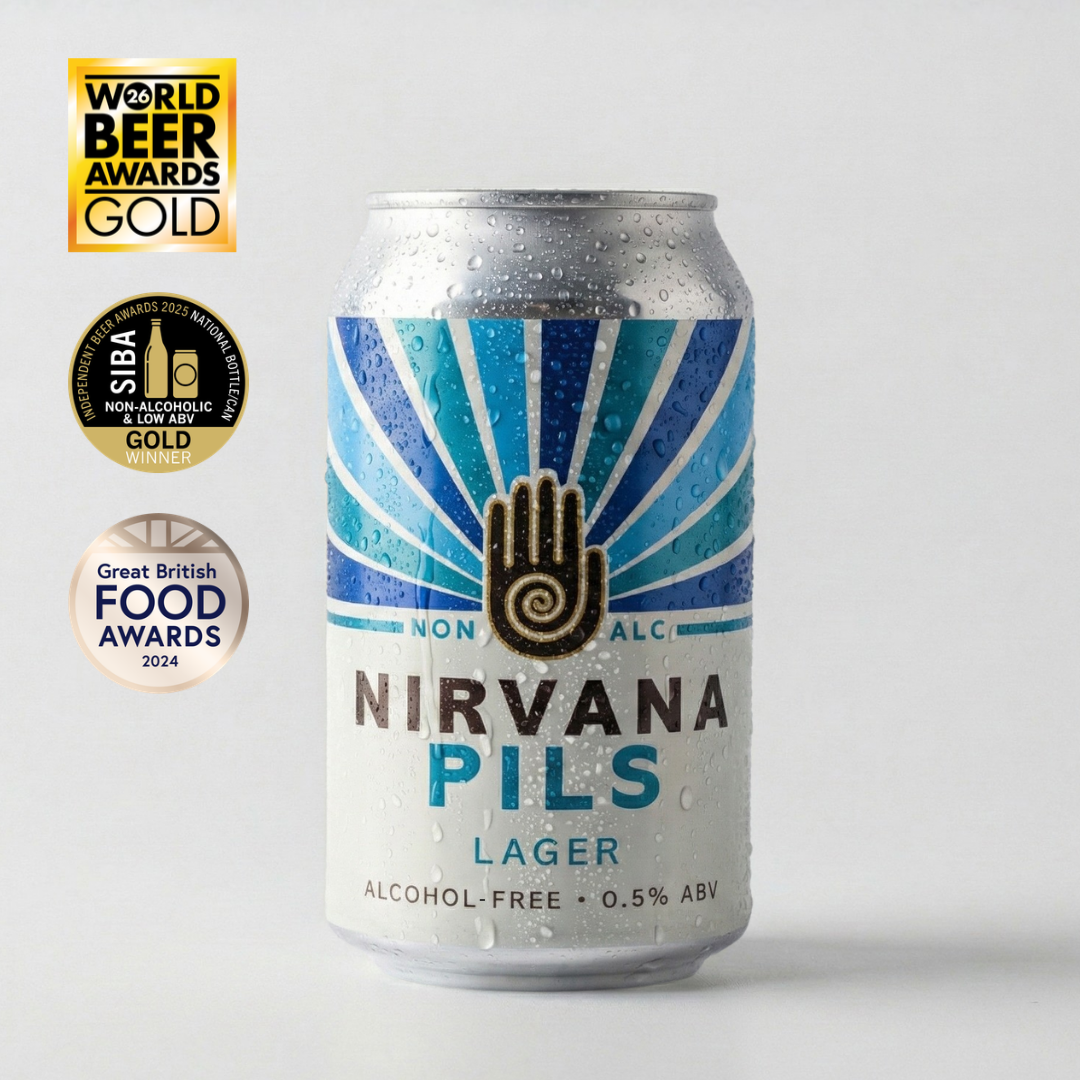
Is it possible to get drunk on non-alcoholic beers like Nirvana?
Essentially, no. Our beers range between 0.2% - 0.5% ABV, and the average liver processes 15 mL of alcohol per hour. To even begin to feel any affect at all,, you would have to drink around four litres of our 0.3% Helles Lager. In an hour.
All in all, switching to non-alcoholic beverages or low ABV beverages can prevent future drinking and driving incidents. It’s always better to reach for one of these drinks over a full-strength one, especially when at the wheel.
Many making the switch worry about sacrificing taste. The good news is that Nirvana beers are carefully crafted to retain that great, traditional beer flavour. We began brewing non-alcoholic beers (only!) since 2016, and since then, we’ve cultivated a community of non-alcoholic lovers who come back again and again for our great beers. Give our award-winning no-low alcoholic beer range a try and see for yourself!
Want to get more non-alcoholic education on a regular basis? Keep an eye on our blog page and give us a follow on social media.